Slow down or else!

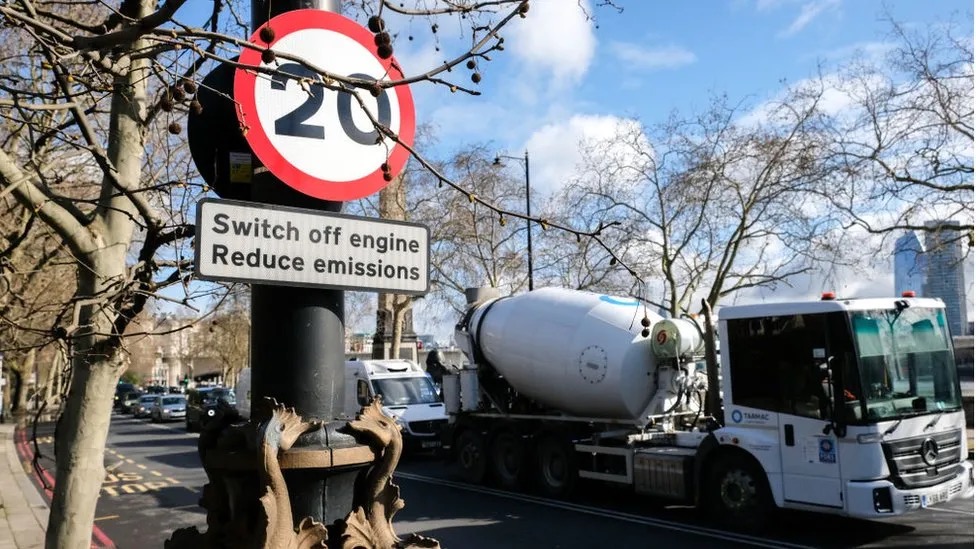
Yesterday, I spent 3 hours at an online ‘speed awareness course’ to avoid police prosecution, a further fine (having already forked out £97 to take the course), 3 points on my squeaky clean licence, and a resultant car insurance premium hike. My offence was driving at 24 miles an hour in a 20 mph zone on Finchley Road, which is virtually a dual carriageway and main artery to the North.

Today, my neighbour, who has also recently been convicted for a similar misdemeanour, sent me a link to a BBC news feature entitled “London is world’s slowest city for drivers, study finds”.

Having now been reminded of national speed limits on urban and rural roads, it appears that London and Wales are the only places in the entire country to impose 20mph speed limits. I am now convinced that this is a money making exercise introduced by Sadiq Khan as a method to recoup the £740 million TFL losses during the pandemic, because no one was going anywhere, for months. Tube fair hikes are now imminent for the same purpose. I wonder though how much has been spent on replacing all the repeater signs and painting new 20mph limits on all the roads whilst pot holes are wreaking havoc because there is no money to repair them.

Virtually everyone I have spoken to has been done for speeding over 20mph, and has opted to fork out £100 for ‘naughty school’, or have 3 points whacked onto their licence which will remain on their record for 4 years or more. It is now becoming a rarity to meet someone who has not been done for marginally exceeding this newly imposed speed limit in London.

Our course instructor informed participants that cyclists feel safer with slower limits on urban roads. We also learned that a whopping 70% of pedestrian injuries take place on urban roads. So it does absolutely make sense to reduce single lane speed limits in residential areas, close to shops, and outside schools, as a measure to lower this casualty rate.

We know too, that anyone cycling instead of driving in London is helping the environment by reducing emissions, and cycle lanes are springing up like mushrooms to help them to do so. I get it – but I don’t get why a busy gateway road to the North needs a snail’s pace limit – it’s nonsense.

The concluding ‘naughty school’ module asked us to demonstrate a long term plan to prevent ourselves speeding in the future. Not least because you cannot attend a course again within 3 years of the last. All present cited the things that most of us are already doing, such as using apps to calculate how long it will take us to get anywhere and allow enough time so we don’t rush – blah effing blah. Perhaps, if our modes of public transport were more reliable, we would be more inclined to ditch our cars.

I am now obsessed with remaining within the limit, and drive like an old lady on a mobility scooter staring at my speedometer. I will probably cause an accident for doing so.

Those ignoring the limits are tailgating those who don’t, causing road rage induced gesticulations, swearing matches, and accidents. Because people are now forced to drive so slowly, I have noticed more culprits pulling out of hidden junctions without stopping, ignoring oncoming traffic, because they judge (wrongly) that you will be able to stop in time to avoid crashing into them.

We are now all deemed to be naughty children in an increasingly nanny state. This scheme surely needs sensible revision so that main road traffic flows smoothly. I suspect too, that the congestion in busier roads is actually contributing to worse emissions from idling engines which make ‘London the slowest city in the world for drivers’, apparently.

10 January 2024

A funny thing happened on the way to the podium

Yesterday, during an email exchange with my old boss, he reminded me of a hilarious ‘incident’ he said he would never forget.

A couple of years ago I organised a business breakfast at the Savile Club in Mayfair to raise money for the charity I was working for at the time.

Over 100 business men, and far fewer business women, gathered for a full English to network whilst supporting the cause.

The guest speaker was an octogenarian erstwhile Arsenal physio who entertained guests with his reflections of his time at the club treating the players. At least 80% of the guests were riveted Arsenal supporters. So far so good.

We agreed in advance that he would speak for a maximum of 15 minutes as we were on a tight schedule. 25 minutes in, there was palpable fidgety restlessness from the guests. One or two got up and left.

Several attempts at discreet gesticulation failed to catch his eye. He wasn’t even close to winding up. It was time for drastic action to cut him off.

In desperation, I resorted to kneeling on all fours and crawled to where he stood at the lectern. My head at this point was level with his crotch. He looked down at me and said loudly into the microphone “is everything all right down there, dear?”

Despite my notoriously filthy mind, I was so focused on interrupting his incessant rambling that it didn’t occur to me how comedic this looked. Any guests who could see me, including my husband, were laughing hysterically. I’m pretty sure that my face went scarlet as I realised how suggestive my rescue mission appeared to the onlookers.

I had completely forgotten about this until my CEO reminded me of it yesterday. Probably because it was without doubt my most embarrassing moment ever. I had subconsciously wiped the trauma from my memory bank.

Over the years I have organised at least 20 fundraising events for a variety of charities. Sometimes things happened which threw a spanner in the works. However, this particular SNAFU was the worst of all of them, by a country mile.

Give us a Job

The mid-life work crisis needs more than a conversation

Photo: Jon Holloway

The Office for National Statistics reported in May 2021 that a quarter of the 4.7 million people furloughed during the pandemic were aged 50-plus. Now the furlough scheme has ended, analysts warn that many of them will be laid off and may remain chronically unemployed. 

The Institute for Fiscal Studies released a report in September 2021 predicting that employment prospects for those over 50 living in London are particularly bleak, especially for those without a degree or professional qualification. 

As a consequence, there are currently hundreds of thousands of unemployed older workers looking for jobs post furlough. This may not concern those who don’t fall into this category. But for those of us that do, it matters.

When COVID-19 cost me my own job 12 months ago, it did not cross my mind that it would be hard to find another, or that my age would be the reason I wouldn’t. My experience over the months that followed proved otherwise.

I applied for several jobs, well within my capabilities, which were ultimately offered to people half my age. Despite recruiters’ commitment to equal opportunities, it became increasingly clear that unconscious bias against older workers was the reason my attempts to find work were routinely thwarted.

Many of us are deterred from taking the arduous steps to prove that we have been discriminated against because it may damage our reputation. Challenging age discrimination is not for the faint-hearted, unless you are a high-profile employee such as Miriam O’Reilly, who successfully won her case against the BBC in 2011. 

After months with no salary, I applied for Rishi Sunak’s new style Job Seeker’s Allowance. With 48 years of National Insurance contributions racked-up, I was eligible — so why not? 

The application process involved an invasive and humiliating phone interview with my job centre coach which lasted 1.5 hours.  When I revealed my age, he responded “I’m not surprised you haven’t found a job – you are eligible for your pension next year”.  

Any doubt that my age was a problem evaporated instantly. I should be put out to pasture together with all the other cancelled older workers deemed past it and equally dispensable.  

Nonetheless, executive search group, Spencer Stuart, reports that the average age of non-executive directors is 60. Their experience is valued, yet they are representative of the very same demographic that is increasingly barricaded from the workplace. 

Spritely Prue Leith, of Bake-Off fame, is a shining example of what people can do, well into their 80’s. The Department for Work and Pensions should consider harnessing her energy to lead a campaign to usurp our prevailing ageist culture.

Whitehall acknowledges that rising unemployment of older workers is a growing problem requiring resolution. The Department for Business, Energy & Industrial Strategy has recently initiated a consultation process proposing that all employees should be offered the option to work flexibly. 

Additionally, the ONS has recently released data proving that older workers have benefitted from working at home during the pandemic. Those interviewed reported that their productivity, well-being, and work-life balance improved.  

Evidence also shows that working from home enables older people to retire later.  Employers should now be considering how they can retain experienced talent by offering part-time working and job-sharing.   

The Centre for Ageing Better is one of a few organisations engaged in reversing the pervasive ageist mindset. They encourage companies to upskill older employees by offering training and development opportunities. Barclays has partnered with them to trial retraining programmes for those over 50 facing redundancy.

However, lasting change is not achievable unless policies are introduced to facilitate access to employment for older workers. Failure to do so will result in a stockpile of experienced people excluded from the workplace because of their age. 

I recently met someone two months away from retiring as CEO of a well-known charity.  Because of his previous experience in marketing and e-commerce, he succeeded in negotiating an alternative part-time role to stave off unwanted retirement. 

With final salary pensions becoming extinct, it is crucial for older people to earn a living for as long as possible.  The proposed cancellation of the triple lock pension pledge presents a further blow to those approaching retirement.  

The number of people over 65 will increase by 40% over the next 20 years. The number of households where the oldest person is 85 and over is increasing faster than any other age group (ONS 2017).  

Providing basic social care to our ageing population is already a major challenge. It is therefore incumbent on Government to ensure that older people are paying their taxes for as long as possible. 

The cost of living is rising and those without work may be unable to put food on their tables. People without bulging pension pots to dip into, will undoubtedly be draining the public purse by claiming all manner of benefits to meet basic needs, choking the economy as it stutters towards recovery. 

Losing my own job has taken me on an unexpected journey forcing me to think about a career change. I am not yet ready to retire, nor can I afford to. I suspect that there are many in a similar situation.  

It is time for experienced older workers to be valued rather than discarded to the graveyard of perpetual unemployment. The Government pledged in their manifesto to build back better and to level up opportunities for all. Without a thriving older generation this pledge will remain unfulfilled.

Reference: Give us a Job — Alan Bleasdale – Boys from the Blackstuff

The Marble Arch Mound of Absurdity

September 2021

Today I was driving down Edgware Road towards Marble Arch and caught my first sight of the weird “Mound”. Aware of the widespread mockery and criticism of this hugely expensive, architect designed temporary “Art” installation I was intrigued enough to park up and visit.

There were no queues – no surprises there then – and after a cursory bag check I climbed the 130 steps to the 25 metre viewing platform with the handful of others who had showed up. Walking up the hill reminded me of the opening title sequence of the Teletubbies dancing through a grass covered mountain except this grass is really ugly. The planned “lush landscape of thick vegetation, dotted with mature trees” was nowhere to be seen. The side of the structure is covered in a thin unsightly white tarpaulin, presumably to conceal the scaffolding which holds it up, and despite the immersive hidden light exhibition at the end, there is a reason the project has been dubbed “London’s worst attraction” – because it is! It actually looks like a year 11 DT project gone badly wrong. I’m not surprised those who first visited when it opened in July demanded a refund – there is nothing to see except a bunch of scaffolded building sites and quite a nice aerial view of Hyde Park. I thought the whole thing was an expensive embarrassment with my only positive takeaway being the activity alert buzzing on my wrist telling me I’d climbed loads of stairs!

This ridiculous eyesore was the brainchild of the Conservative Deputy Leader of Westminster City Council who has since “resigned” after budgeted project costs spiralled out of control. Apparently he thought it would draw Netflix weary Lockdowners out of their burrows back into the West End to spend their money in Oxford Street, eat out at restaurants and go back to the theatre. How did a pile of earth supported by megatons of scaffolding covered in brown turf and wilting saplings end up costing £6million or even the £2 million first reported? How will these costs be recovered since they were forced to waive the admission fee in the wake of a tsunami of complaints? The official website lists corporate partners who have been persuaded to support the project. I doubt their contributions will touch the sides given the exorbitant costs.

I hear there’s now a meeting scheduled for Wednesday to discuss whether it should be knocked down completely following protests from outraged opposition councillors at Westminster City Council. The damage is done whether it stays or not or whether they cover it in twinkly lights at Christmas. What really bothers me though about this reckless stupidity is that we have serious issues that need sorting in London and squandering public money on rubbish like this is outrageous and irresponsible in the extreme.

@jrfblogs

jane@hotunderthecollier.net

“There’s another fine mess you’ve gotten us into!”

In David Cameron’s book ‘For the Record’ he says his “greatest regret” is that those who advocated to stay in the EU lost the vote – which ultimately divided the country, paralysed the government and left Britain increasingly at risk of leaving the EU without any deal. Now we are staring down the barrel of the Brexit shotgun living with endless manifestations of its reality.

The shortage of haulage drivers is not a new problem, but the government have been woefully incompetent in addressing this issue to mitigate its impact. Pre Pandemic the numbers of haulage drivers included tens of thousands from the EU. Thanks to the UK being catapulted from the single market, border bureaucracy has forced these drivers to go back home or work elsewhere. This is all compounded by a backlog in HGV driver COVID testing, making it impossible to get enough new drivers on the road. Most are paid by the mile rather than by the hour so delays and new tax changes are costing them money.

Of course this is only one example of the endless barricades which now present obstacles to cross-border working. Medically trained professionals may now not have their UK credentials recognised within the EU making it harder to secure posts in Europe and we all know how critical it is for doctors and scientists to collaborate internationally. Not to mention the barriers in place which block many EU citizens wanting to come and work in the NHS, teach in our schools or build our houses.

How anyone honestly believed that leaving the EU was a good idea is beyond me – it wasn’t and it isn’t and whatever was wrong with our relationship with Brussels, it wasn’t worth the Brexit train wreck that we are now living through.

@jrfblogs

The gathering storm of anti-semitism


2EC5B04A-E531-4073-9341-AD45C6056682

On my first day at a well known boarding school at the heart of the British establishment I remember the head mistress asking my parents if I would attend chapel. They both looked at me and I said “yes” immediately – I was 11 years old.  At no time had I discussed this decision with my parents who had been through a particularly messy divorce and my Jewish education had been pretty much learned from my maternal grandparents.  This was a knee jerk response probably spurred by my desire to assimilate and be a part of the school community as quickly as possible – not different from the others.  I sang in the school choir and went to chapel twice a day – I knew the service by heart and sang at my friends’ communions.  It never felt odd and actually became comfortable and soothing.  Nonetheless, I always had a strong sense of my Jewish roots and was proud of them and was happy to answer questions about Jews and Jewish life and traditions.   I had no idea that these anecdotes would later be used as weapons of horrendous abuse and torment by some of those closest to me.

Two friends in my year were brave enough to go the head and reveal what was going on and they were insistent that something should be done which led to the expulsion of the perpetrators.  I did not know this till many years later when we got together as we do from time to time.  Social media makes it easier to stay in touch and I am eternally grateful to them for speaking out and for watching my back.

Being Jewish for me has never been about religion.  It is something intangible, inherent untouchable and precious.  I am loud and proud about my Jewish roots and so are my children which makes me very happy indeed.  I remember waking up on 24th June 2016 to the result of the referendum with a sense of real foreboding.  The process has unleashed the ugliest racism and intolerance which is gathering momentum.  I witness it every day travelling to work observing how people behave towards each other with disregard and contempt.  It is rampant and scares me – a lot.  Those who speak out against anti-semitism on Twitter are reviled and vilified.  We can no longer be silent. Those who bravely speak out on our behalf are too few.  In hindsight, the determination and bravery of my young friends at school for calling out the bullies and anti-semites was remarkable.  We all need to do the same.

@jrfblogs

Clarion call for social responsibility

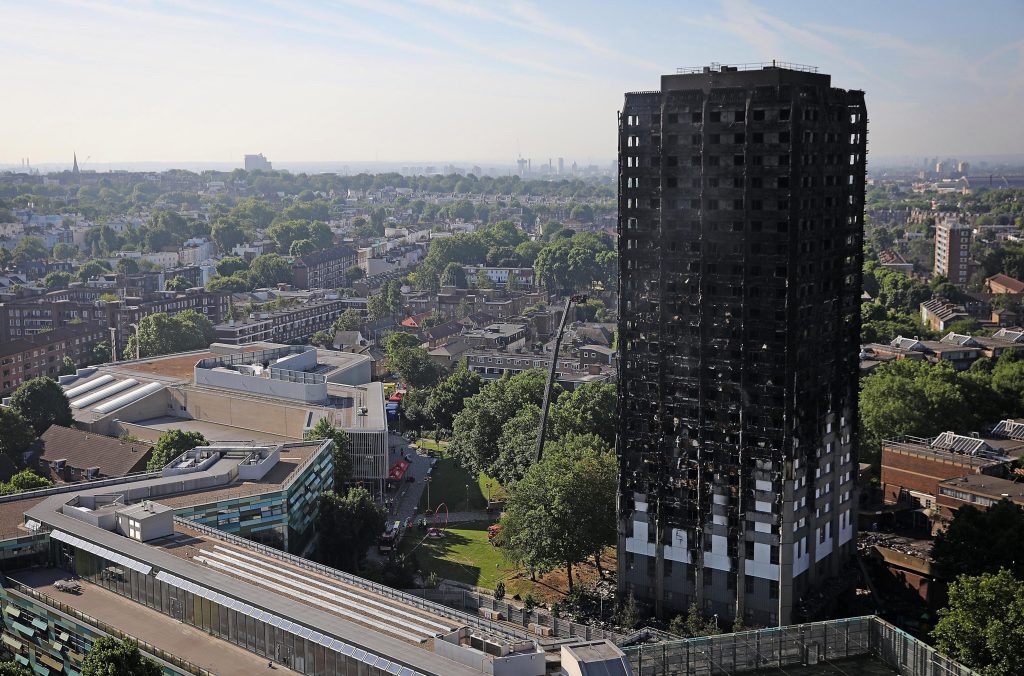
The charred remains of Grenfell Tower visible across London are a horrific reminder of the inequalities on our doorstep.  It is now incumbent on us all to collectively step up and effect the necessary change.  As someone who has fundraised for half of my life for many deserving causes I feel compelled beyond measure to do something to galvanise those able to right this wrong – as quickly and as practicably as possible.

Councils are selling off vast swathes of land to greedy developers to mitigate stringent budget cuts. Fair rent officers are a thing of the past and those very front line workers who heroically mop up the fall out of disasters such as this – be they fire fighters or nurses – are unable to afford homes whilst landlords can charge what they want for properties that are simply not up to scratch.

I met a palliative care nurse who told me that two of her friends had perished in the fire.  She lived there herself 10 years ago and said to me that even then there were concerns that safety measures were not addressed despite the efforts of residents to alert RBKC to the dangers.  A friend of mine who is a counsellor went to the site to offer trauma counselling and was unable to find any council representative to speak to.

Whitehall have dragged their feet over the social housing issue for years, or worse, swept it under the carpet.  Whatever the outcome of the enquiry into what happened at Grenfell Tower it is likely that installing sprinklers would have necessitated relocating tenants whilst this work was done and was no doubt deemed to be too expensive.  Cutting costs in this way is criminally negligent and in this case had people living in a tower block that ignited from top to bottom in minutes due to cheap modifications and blatant disregard for the residents’ valid and repeated concerns.

The layers of culpability for this tragedy are becoming apparent.  The Coroner’s recommendations following the inquest into the Lakanal House fire in 2009 were ignored.  This must not be allowed to happen again.

It is all very well to relocate Grenfell Tower residents who have lost their homes but how are they supposed to even modestly equip their new homes when so many already have difficulty putting dinner on the table for their families?  My sister, who lives nearby, has been volunteering to co-ordinate the tsunami of donations that are flooding into the area and no RBKC representatives are anywhere to be seen to help or to arrange storage for the overflow.  The community are rallying and those responsible for this catastrophe are hiding.

The way I see it a Social Housing Refurbishment Fund should be set up immediately and managed independently by experts to ensure that funds are dispersed without political agenda.   The larger grant making organisations can surely collaborate to contribute substantial sums which should be matched by the government so that at the very least tower blocks can be refurbished to meet health and safety standards and not just to look pretty for the neighbours.  The finance sector and large corporations should also now step up to the mark. Not only by digging deep into their profit margins but by coming together and managing this project to demonstrate the true meaning of social responsibility.

@jrfblogs

June 2017